
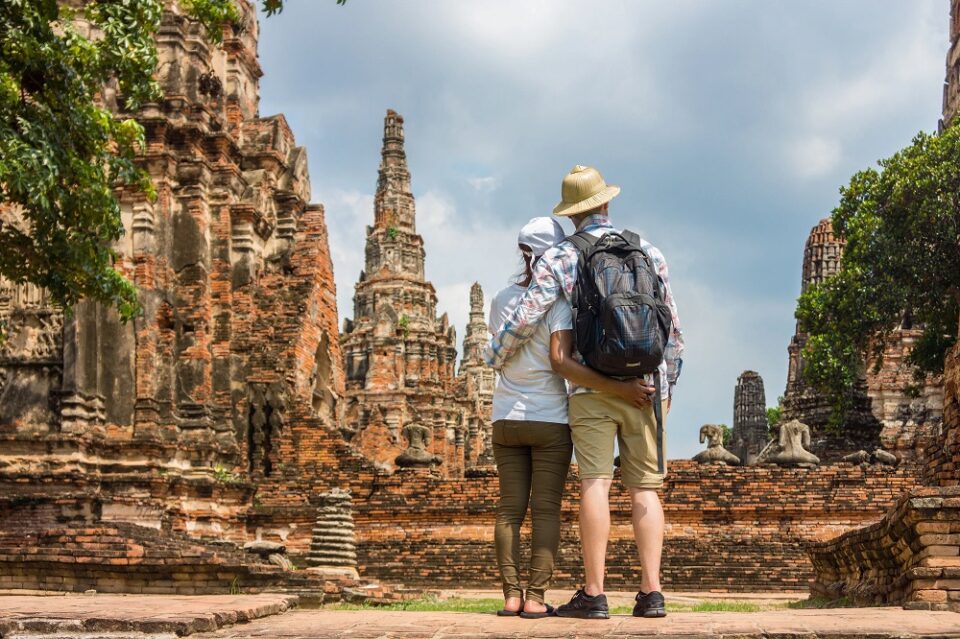
Human civilization is a massive mosaic of languages, traditions, belief systems, and social behaviors. For individuals who spend their entire lives within the geographical boundaries of their birth, their worldview is naturally shaped by a single cultural lens. This localized perspective often fosters ethnocentrism, a cognitive bias where one’s own culture is viewed as the default standard of normalcy, while differing customs are perceived as unusual, incorrect, or inferior.
The most effective antidote to this insular perspective is travel. Stepping outside of a familiar environment and immersing oneself in an entirely foreign society initiates a profound psychological and intellectual transformation. Travel forces a direct encounter with different ways of living, converting abstract geographical concepts into tangible, human experiences. By dismantling deeply ingrained stereotypes and fostering empathy, travel serves as a vital instrument for building authentic cultural awareness and navigating an increasingly interconnected global society.
The Disruption of Ethnocentric Bias and Cognitive Bias
True cultural awareness begins with the destabilization of your own assumptions. When you live in a homogeneous environment, your society’s social norms, etiquette rules, and institutional structures seem natural and absolute. Travel completely disrupts this comfort zone by exposing you to systems that operate on entirely different foundational logic.
Challenging the Default Settings of the Mind
When an individual travels to a region where daily life follows a different rhythm, they experience immediate cognitive dissonance. This friction is not a negative outcome; it is the exact mechanism that drives intellectual growth. Consider the varying social structures that a traveler must navigate:
-
Temporal Architecture: In many Western societies, time is viewed linearly and rigidly, prioritizing punctuality and speed. However, traveling through parts of Southern Europe, Latin America, or Africa exposes individuals to polychronic time cultures, where schedules are fluid, human relationships take precedence over clocks, and a slower pace dictates commerce.
-
Communication Nuances: High-context cultures, prominent in parts of East Asia and the Middle East, rely heavily on implicit signals, non-verbal cues, and historical relationships to convey meaning. This contrasts sharply with the low-context, direct, and explicit communication styles favored in North America.
Navigating these differences forces travelers to realize that their native way of doing things is not the objective apex of human organization; it is simply one option among many. This shift from ethnocentrism to cultural relativism is the cornerstone of true global literacy.
Developing Empathy Through Experiential Immersion
Reading a textbook, watching a documentary, or analyzing historical data provides a conceptual understanding of a foreign country. However, intellectual knowledge lacks the emotional weight required to build deep empathy. Travel converts academic learning into a physical, sensory reality.
The Power of Everyday Interactions
The most profound cultural lessons do not occur inside museums or tourist resorts; they happen during ordinary, unscripted moments of daily life. Navigating a crowded public market, sharing a meal in a family-run diner, or figuring out a complex public transit system in a foreign language forces the traveler to engage directly with local residents.
These interactions humanize the population. When you sit face-to-face with an individual whose political, religious, or socioeconomic background is entirely different from your own, the abstract labels used by media outlets dissolve. You begin to recognize shared human commonalities—such as parental devotion, professional ambitions, and the desire for community—which provides a human framework that counters xenophobia and division.
Language Acquisition and the Alteration of Thought
Language is more than a simple tool for exchanging information; it is the physical structure through which a specific society processes reality. While learning a language fluently requires years of study, the localized linguistic exposure that occurs during travel offers immediate cultural insights.
Vocabulary as a Cultural Mirror
When a traveler attempts to learn basic phrases to navigate a foreign city, they quickly discover concepts that have no direct translation in their native tongue. These linguistic gaps reveal what a specific society values most.
For instance, the Japanese concept of Wa emphasizes harmony and the prioritization of the collective good over individual desire, a concept woven into the structure of the language itself. Similarly, the Zulu philosophy of Ubuntu, which asserts that a person is a person through other persons, dictates daily social interactions across Southern Africa.
Attempting to speak a local language, even clumsily, shows a baseline level of humility and respect. It signals to the local community that you are there to learn rather than to impose your own presence, unlocking authentic interactions that are inaccessible to insulated tourists.
Uncovering the Deep Roots of Historical Context
Cultural awareness requires understanding why a society behaves the way it does, which is impossible without examining its historical trajectory. Visiting historical sites, architectural landmarks, and geographic borders provides a clear look at the systemic pressures that shaped a nation’s collective psyche.
Understanding Modern Behavior Through Past Reality
Seeing how geography and history intersect changes your understanding of current geopolitical and social realities. Walking through ancient European cities reveals why these societies prioritize dense urban layout, public rail systems, and localized commerce over suburban expansion. Visiting regions shaped by colonial exploitation helps travelers understand modern economic struggles, resource preservation efforts, and institutional distrust.
This historical context prevents travelers from making superficial judgments about a country’s current challenges. It replaces simplistic criticism with an informed appreciation for the resilience, trauma, and structural evolution that define a society’s modern identity.
Transitioning from a Tourist to an Intentional Traveler
The mere act of changing your physical location does not guarantee the development of cultural awareness. It is entirely possible to visit a foreign country while remaining inside an insular bubble of luxury hotels, familiar restaurant chains, and isolated tour buses. To cultivate true cultural literacy, one must transition from a passive tourist to an intentional traveler.
Cultivating Mindful Exploration
Intentional travel requires adopting a mindset of active observation and structural humility. This means deliberately seeking out local neighborhoods, supporting independent businesses, and participating in local traditions without treating them as a performance.
It involves stepping away from highly curated social media hotspots and embracing the discomfort of not being in control. When a traveler enters a space with a desire to listen rather than evaluate, the journey ceases to be an act of consumption and becomes a profound process of self-redefinition and global connection.
Frequently Asked Questions
What is culture shock and how can a traveler effectively manage it?
Culture shock is the psychological and emotional disorientation experienced by individuals when they are suddenly exposed to an unfamiliar cultural environment. It occurs when the familiar social cues, behavioral norms, and communication patterns of home are removed, leading to feelings of anxiety, frustration, and isolation. Travelers can manage culture shock by maintaining an open, non-judgmental mindset, establishing a predictable daily routine, staying physically hydrated, and connecting with expatriate or local guides who can explain confusing social interactions.
How does the concept of personal space vary across different global cultures?
The definition of acceptable personal space is deeply cultural and varies significantly by region. In low-contact cultures, such as those in Northern Europe, Japan, and North America, individuals prefer maintaining a physical distance of about three feet during casual conversations, and accidental touching is avoided. Conversely, high-contact cultures, common in Latin America, the Mediterranean, and the Middle East, feature closer physical proximity, frequent conversational touching, and direct eye contact, which are interpreted as signs of warmth, trust, and sincerity.
What is the specific difference between cultural appreciation and cultural appropriation?
Cultural appreciation involves exploring, learning about, and engaging with a foreign culture with deep respect, understanding, and proper contextual awareness. It is a reciprocal exchange driven by a desire to broaden one’s worldview and support the originating community. Cultural appropriation, by contrast, occurs when elements of a marginalized culture—such as sacred symbols, traditional clothing, or religious practices—are taken out of context and used by members of a dominant culture for personal profit, entertainment, or aesthetic fashion, without understanding or respecting their original meaning.
How can a traveler support local economies ethically while exploring developing nations?
Ethical travel involves keeping financial resources directly within the host community. Travelers can achieve this by staying in locally owned guesthouses instead of multinational hotel chains, hiring independent local guides, and purchasing authentic handicrafts directly from regional artisans rather than mass-produced souvenir shops. Additionally, dining at neighborhood eateries that source ingredients from local farmers ensures that your travel expenditures directly foster economic resilience, community development, and sustainable tourism practices.
Why do certain cultures prioritize collectivism over individualism?
Collectivist cultures, prominent throughout Asia, Africa, and Latin America, prioritize the cohesion, harmony, and survival of the group—such as the family, workplace, or community—above individual desires or personal ambitions. This worldview is often rooted in historical agricultural necessities, religious traditions, and philosophical systems that required collective labor to survive. This contrasts with Western individualist cultures, which trace their roots through the Enlightenment and industrialization, prioritizing personal autonomy, self-reliance, and individual rights.
How does travel alter an individual’s perception of their own native culture?
Travel acts as a psychological mirror, allowing you to view your native country from an external perspective. When you spend time in a society with completely different values, you begin to recognize the invisible biases, systematic flaws, and unique strengths of your own homeland. You may return home with a newfound appreciation for certain domestic conveniences or legal protections, while simultaneously viewing your culture’s hyper-consumerism, work ethic, or social stratification with a critical, analytical eye.
Can digital travel experiences build the same level of cultural awareness as physical travel?
Digital travel experiences—such as virtual reality tours, language learning applications, and international documentaries—provide valuable introductory information and visual context. However, they cannot replicate the deep cognitive and emotional transformation driven by physical travel. Virtual platforms remove the element of unpredictable human interaction, the sensory environment of local scents and sounds, and the therapeutic discomfort of navigating physical spaces where you are a minority. Physical presence remains a necessary requirement for genuine cultural immersion.